The mandatory Digital Product Passport in the EU: What the regulations require and how to comply with iPASS
By Marta Escabias

The transition to a circular economy and sustainable economy in Europe has gone from being an ideal to a firm commitment driven by the regulations of the European Union. One of the key pillars of this process is the Digital Product Passport (DPP), an innovative tool that will centralize all the essential information of products throughout their life cycle.
The introduction of the DPP is not optional: it is part of the Ecodesign for Sustainable Products Regulation (ESPR), approved in 2022 and which will progressively enter into force in the coming years. This regulation establishes that most consumer goods marketed in the European market must have a DPP, which implies a legal obligation for manufacturers, distributors, and importers.
In this article, we will analyze in detail what this obligation consists of, which sectors it initially affects, what the planned deadlines are, and, above all, how technological solutions such as iPASS allow companies to adapt efficiently and obtain competitive advantages while complying with the legislation.
What is the Ecodesign for Sustainable Products Regulation (ESPR)?
The ESPR is one of the central pieces of the European Green Pact and the Action Plan for the Circular Economy. Its objective is to guarantee that the products that are marketed in the EU are more durable, repairable, recyclable, and sustainable from design to the end of their useful life.
Within this framework, the Digital Product Passport is the star instrument: a digital system in which information about each product is collected, organized, and shared. Thanks to it, any actor in the value chain—from manufacturers to consumers and recyclers—will be able to access reliable and traceable data on:
- Origin of materials.
- Chemical composition and percentage of recycled content.
- Manufacturing processes and environmental footprint.
- Repair and maintenance instructions.
- Information on reuse and recycling.
- Regulatory compliance and associated certifications.
This passport will be accessible through a QR code or digital link integrated into the product or its packaging, allowing unprecedented transparency in the European market.
The mandatory DPP: Who is affected?
The regulations establish that all products regulated by the ESPR must have a Digital Passport, although its implementation will be carried out gradually. The first three priority sectors defined by the European Commission are:
- Consumer electronics and appliances:
- Mobile phones, tablets, computers, refrigerators, televisions, etc.
- The high turnover of these goods and the impact of their recycling makes them a critical area.
- Batteries, including those for automotive and solar panels:
- Batteries are strategic for the energy transition, but pose major challenges in recycling and recovery of critical materials.
- Textiles:
- Clothing, footwear, and other textile items must incorporate information on materials, manufacturing processes, and recycling options.
In the coming years, other sectors, such as construction or packaging, are also expected to be integrated into this obligation.
Implementation deadlines
Although the specific deadlines depend on the technical regulation that each sector receives, the first products with DPP could be on the market from 2026, with a progressive expansion towards most consumer goods in 2030.
This means that companies must start preparing now: designing internal traceability processes, collecting reliable data, and looking for technological solutions that simplify compliance with this requirement.
Challenges for companies facing the DPP obligation
Complying with this new regulation is not a mere administrative procedure. For companies, it means facing significant challenges:
- Complex data management: the DPP requires very detailed information about each product, from its design to its recycling.
- Interoperability: the information must be able to be integrated into European systems and be legible throughout the value chain.
- Transparency and trust: companies will not be able to hide polluting processes or non-recyclable materials, as everything will be recorded.
- Adaptation costs: implementing digital traceability systems and guaranteeing their security can generate significant costs if adequate solutions are not used.
- Verification and audit: the data in the DPP must be verifiable, reliable, and auditable by the authorities.
iPASS: A practical solution to comply with regulations
Faced with this scenario, having a tool that allows managing the requirements of the DPP in a simple, secure, and transparent way becomes an urgent need. This is where iPASS, the Digital Product Passport developed by iCommunity, comes into play.
iPASS offers companies a complete platform for:
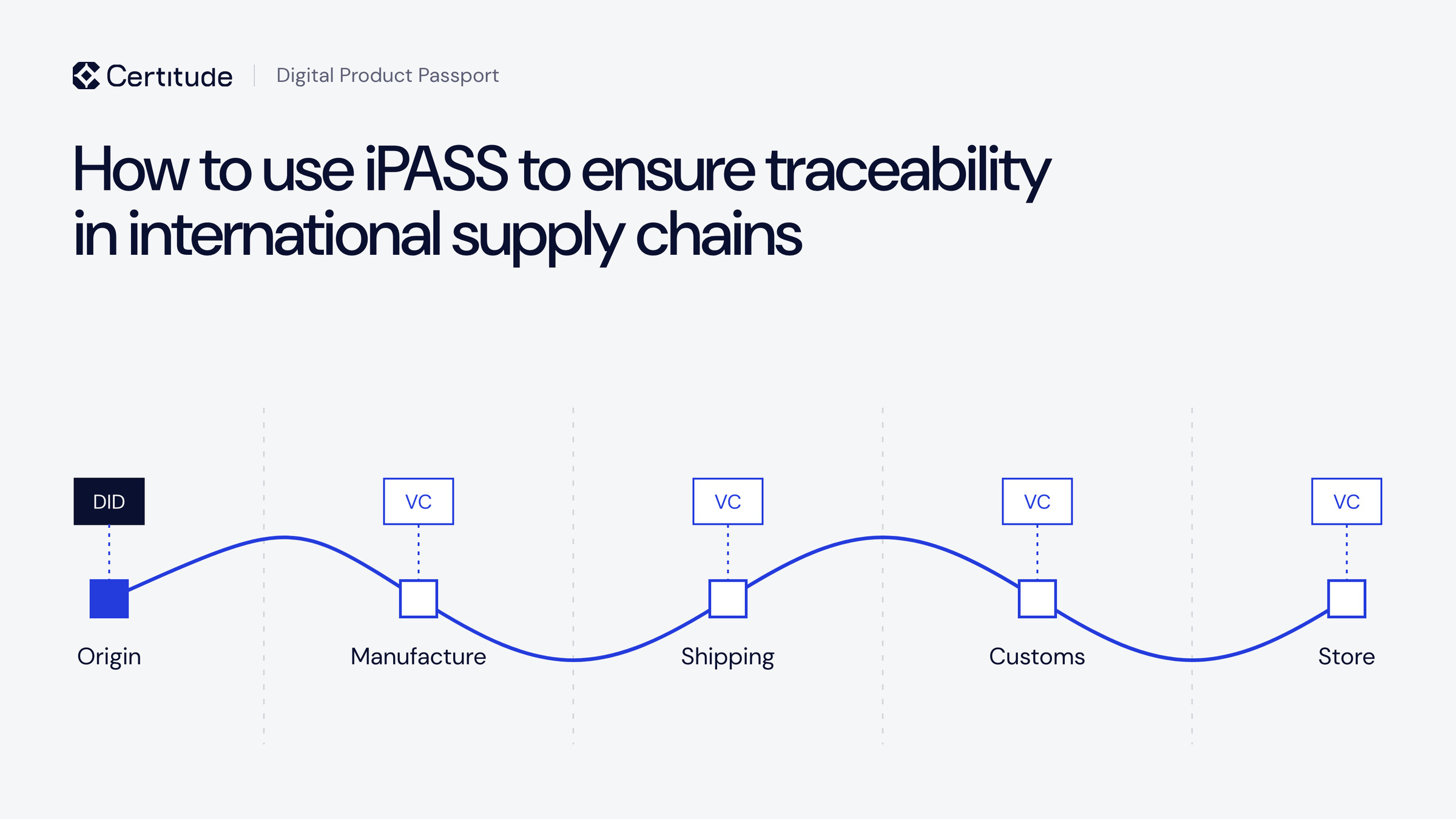
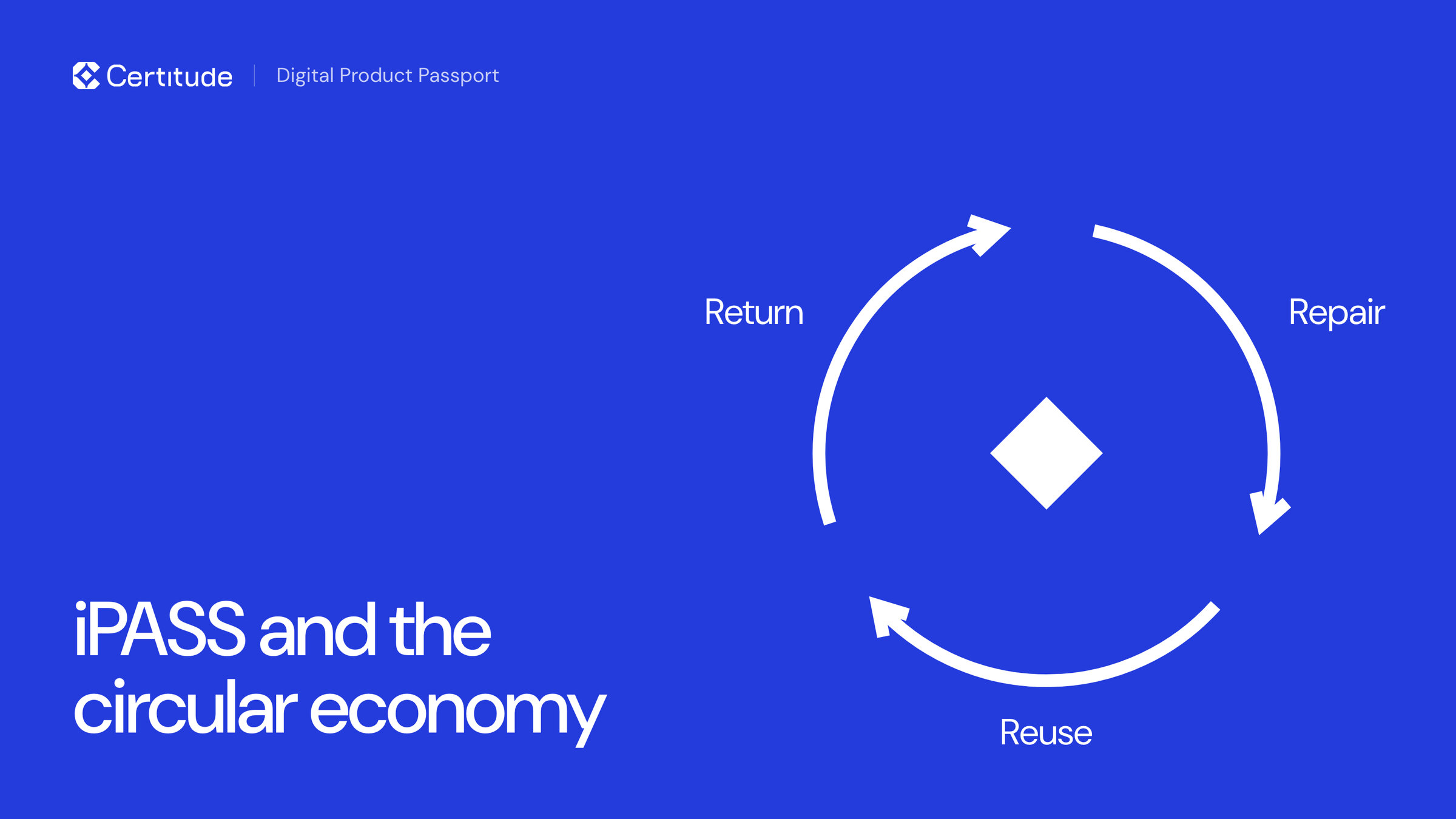
- Issue verifiable evidence at each milestone of the product life cycle: manufacturing, use, maintenance, repair, reuse, and end of life.
- Register that evidence as Verifiable Credentials (VCs), digitally signed using Decentralized Identifiers (DIDs).
- Store and guarantee the immutability of the information through the iBS blockchain platform, publicly accessible.
- Facilitate access to that information through a unique QR or URL for each product.
In practice, iPASS converts a complex regulatory requirement into an automated, secure, and accessible process for all actors involved.
Practical example: How iPASS works in different sectors
- Consumer electronics.
- A smartphone manufacturer registers in iPASS the origin of the materials, the assembly processes, and the carbon footprint of the device.
- The consumer, by scanning the QR code of the mobile phone, accesses all this information and can make more responsible purchasing decisions.
- Batteries.
- An energy company uses iPASS to document the charging cycles, repairs, and the recycling process of solar panels.
- This allows compliance with regulatory requirements and facilitates the recovery of critical materials at the end of their useful life.
- Textiles.
- A fashion brand incorporates data on fibers used, dyeing processes, and recycling recommendations in the QR code of its garments.
- In this way, it transmits transparency to customers and reinforces its reputation as a sustainable brand.
Benefits of complying with the obligation thanks to iPASS
Although at first glance the mandatory DPP may seem like a challenge, solutions such as iPASS turn this requirement into a strategic opportunity. The benefits include:
- Guaranteed regulatory compliance.
- Increased consumer confidence thanks to transparency.
- Differentiation in the market, showing a real commitment to sustainability.
- Optimization of internal processes, by having digital traceability throughout the value chain.
- Access to financing and public aid, since initiatives aligned with the Green Pact are usually a priority in European programs.
The mandatory Digital Product Passport marks a turning point in the way we produce, sell, and consume in Europe. This is a structural change that will not only require adaptation by companies, but will also open up new business opportunities and strengthen consumer confidence.
In this context, iPASS is presented as the ideal tool to face the challenge with guarantees, facilitating regulatory compliance and offering added value to all actors in the value chain.
Preparing from today will allow companies not only to comply with the law, but also to lead the transformation towards a more sustainable, circular, and transparent market.