The Digital Product Passport applied to consumer electronics: Guaranteeing traceability and trust.
By Marta Escabias

Consumer electronics are an essential part of our daily lives. Smartphones, computers, televisions, tablets, and small appliances accompany us at every moment of the day. However, behind this industry lies a major challenge: the sustainability and traceability of products that, in many cases, have a considerable environmental impact and an increasingly shorter life cycle.
Faced with this challenge, the European Union is promoting the Digital Product Passport (DPP) as part of its Circular Economy Strategy and the European Green Deal. This initiative seeks to offer verifiable and accessible information on consumer goods, facilitating responsible decisions and ensuring the proper management of each product in all its phases: manufacturing, use, repair, reuse, and recycling.
In this article, we will analyze how the DPP will impact consumer electronics, what benefits it brings to manufacturers and consumers, and how solutions such as iPASS turn this obligation into a competitive advantage for the sector.
The challenge of consumer electronics
The electronics industry faces three major challenges in terms of sustainability:
- Rapid obsolescence: technological innovation means that devices are constantly being renewed, generating millions of tons of electronic waste every year.
- Poor traceability: consumers usually do not have access to clear information about the origin of materials (for example, critical minerals) or about manufacturing conditions.
- Difficulties in recycling: many electronic products are not designed with recycling in mind, which makes it difficult to recover valuable materials.
The Digital Product Passport emerges as a response to these problems, aligning the industry with the objectives of the circular economy.
How does the Digital Passport work in electronics?
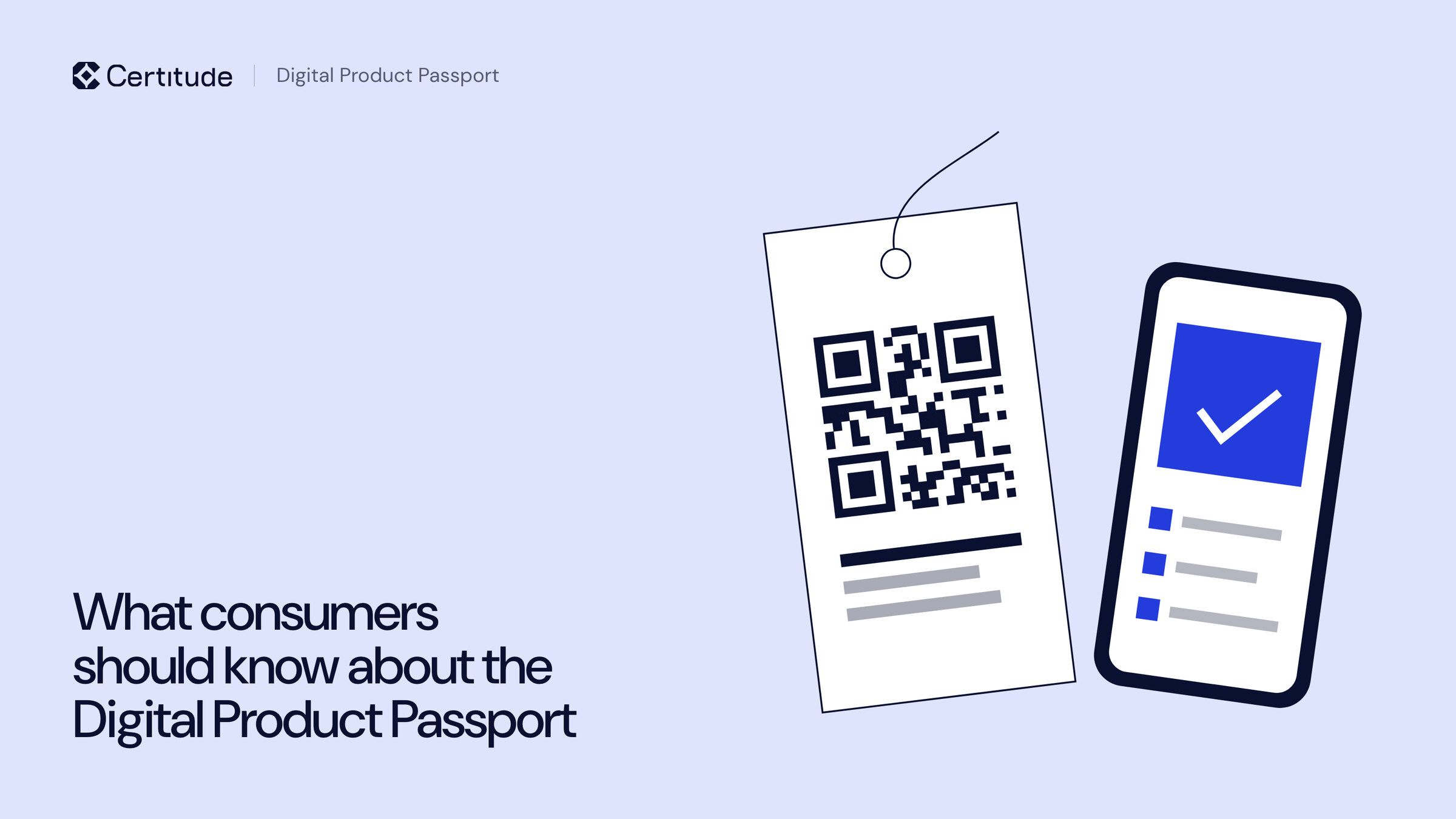
In practice, each electronic device will have a unique digital identifier, generally accessible through a QR code or URL, which centralizes key information such as:
- Product composition: type of materials, use of recycled plastics, origin of metals or minerals.
- Environmental impact: data on the carbon footprint generated during production and transport.
- Durability and repairability: instructions for maintenance, repair guides, and estimated service life.
- Software updates: information on compatibility and technical support.
- End of service life: clear instructions for recycling and responsible waste management.
All this information will be updated during the product’s life cycle, creating complete and accessible traceability for consumers, authorities, and recyclers alike.
Benefits of the DPP in consumer electronics
For consumers:
- Greater transparency in purchasing: customers will be able to compare devices not only by price and technical characteristics, but also by their environmental impact and durability.
- More confidence in the brand: knowing that a product meets sustainable standards generates loyalty to the company.
- Responsible consumption decisions: clear information on repairability allows opting for more durable products.
For manufacturers:
- Regulatory compliance: the DPP will be mandatory in Europe, so its adoption is key to operating without legal risks.
- Competitive differentiation: brands that get ahead will gain visibility and reputation in sustainability.
- Process optimization: data collection makes it easier to improve the supply chain and reduce costs.
- Greater market confidence: documented transparency generates better relationships with consumers, distributors, and authorities.
For the environment and society:
- Reduction of electronic waste: the DPP encourages repairs and extends the life of devices.
- More efficient recycling: knowing the exact composition of each product makes it easier to recover critical materials.
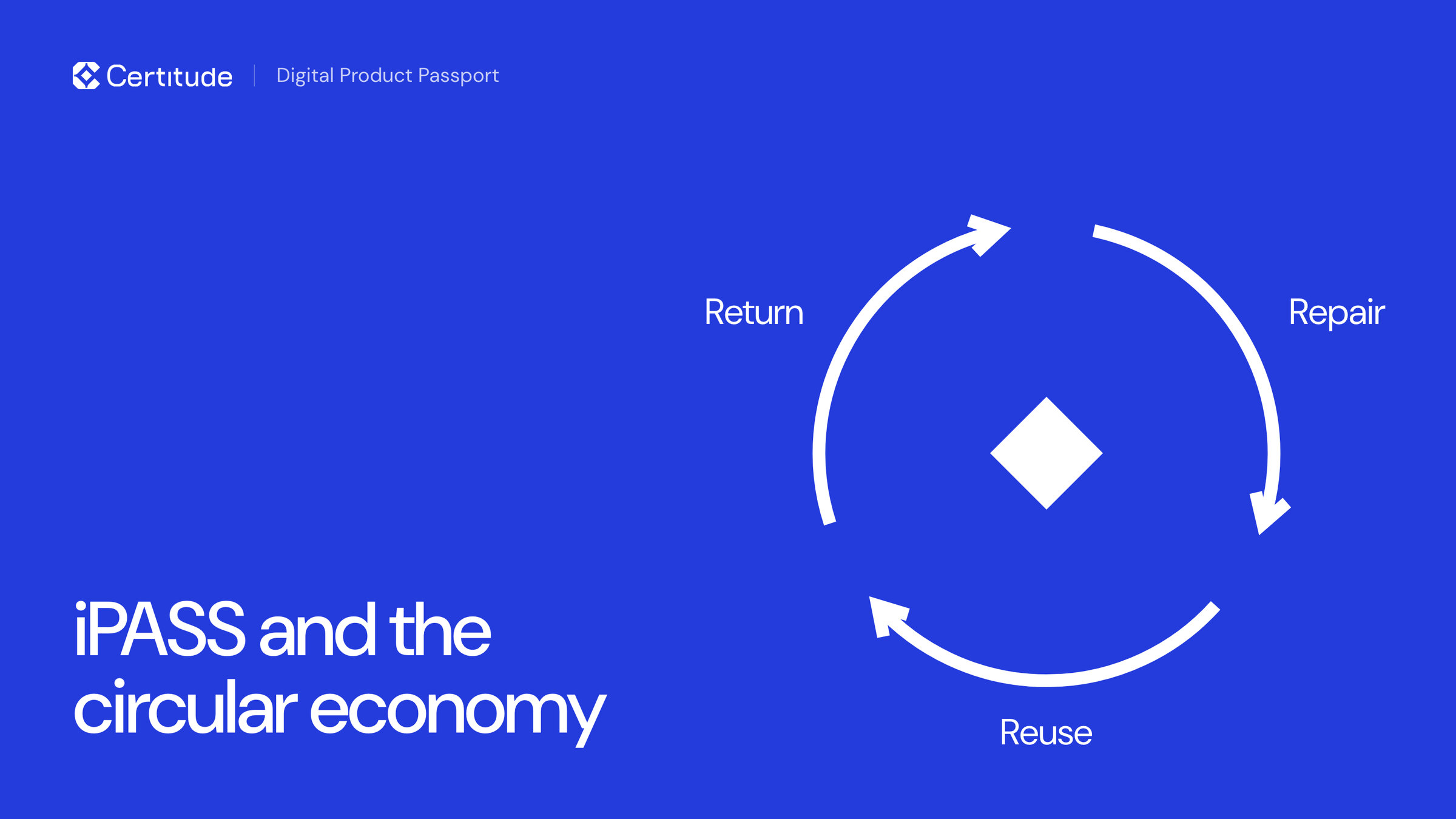
- Boost to the circular economy: the electronics sector will move from a linear model to a circular one, in which each product is designed with its reuse in mind.
Practical example: a smartphone with DPP
Imagine you buy a new smartphone. By scanning its Digital Passport QR code, you could see:
- That 30% of the aluminum in the chassis comes from recycled material.
- That the cobalt in the battery has responsible extraction certification.
- Instructions for replacing the screen in case of breakage.
- Estimated software support time (5 years).
- Authorized points for recycling it at the end of its service life.
This level of transparency completely changes the relationship between consumer and product, favoring trust and shared responsibility.
iPASS: the practical solution for the DPP in electronics
Although the concept of the DPP is clear, companies need concrete tools to implement it. This is where iPASS comes in, iCommunity’s solution for creating and managing Digital Product Passports.
How does iPASS work in consumer electronics?
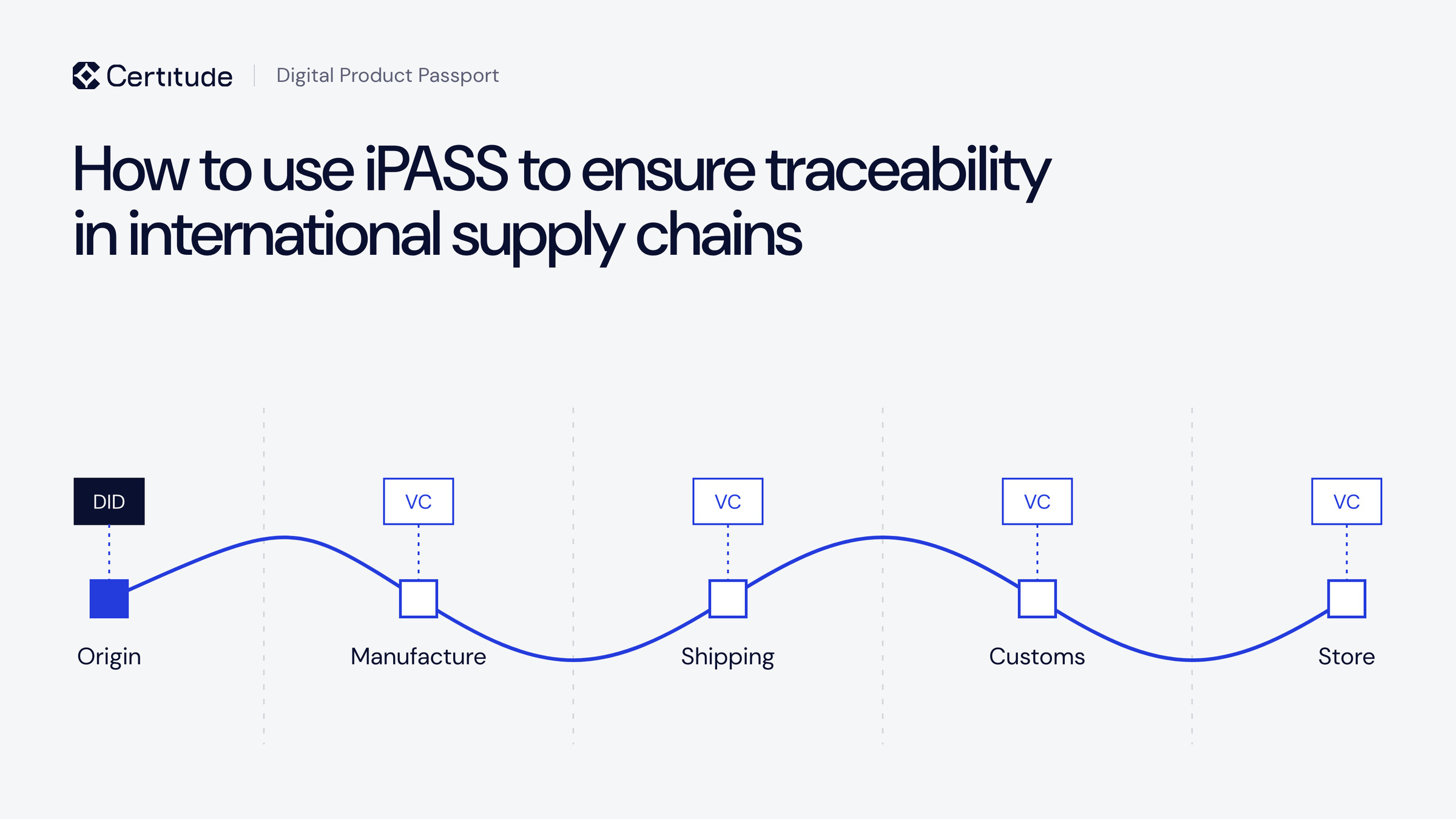
- Registration of product milestones: each stage of the device’s life cycle (manufacturing, use, maintenance, repair, recycling) is documented with Verifiable Credentials (VCs).
- Secure digital signatures: these evidences are validated with Decentralized Identifiers (DIDs) that guarantee their authenticity.
- Blockchain storage: all information is recorded in blockchain through the iCommunity iBS platform.
- Access via QR/URL: the consumer scans the code on their device and accesses the data in seconds.
Benefits of iPASS in the electronics sector
- Simplified regulatory compliance: automates the collection of data required by European regulations.
- Greater reputation: associating products with blockchain increases credibility.
- Improved customer experience: consumers appreciate being able to access clear and verifiable information.
- Scalability: can be applied from small appliances to complex electronic equipment.
Examples of iPASS use in electronics
- Laptops: the digital passport includes details on the materials used, available software updates, and component repair guides.
- Smart appliances: energy consumption, replaceable parts, and efficiency certifications are documented.
- Televisions and screens: information on carbon footprint in production and recommendations for recycling LCD or OLED panels.
Challenges and opportunities for companies
Adopting the DPP in consumer electronics implies certain challenges, such as the need to collect more detailed information, invest in digital systems, and ensure interoperability with European standards. However, the opportunities far outweigh the challenges:
- New business models: repair, reconditioning, or recycling services will gain prominence.
- Access to green financing: companies aligned with the Green Pact will be able to access European funds.
- Customer loyalty: transparency strengthens the bond with more demanding consumers.
The Digital Product Passport will mark a turning point in the consumer electronics industry. Thanks to it, consumers will have more information, companies will be able to differentiate themselves, and society will move towards a more sustainable model.
However, the success of this transformation depends on having tools capable of materializing the concept. iPASS is positioned as the ideal solution, offering transparency, traceability, and trust through blockchain technology and verifiable credentials.
In a sector as dynamic as electronics, adopting the DPP with iPASS is not only a regulatory obligation, but a strategic opportunity to lead the change towards more conscious and responsible consumption.