Technical and implementation challenges of the DPP (costs, infrastructure, acceptance)
By Marta Escabias
The Digital Product Passport (DPP) is one of the most transformative initiatives of the European Union in terms of sustainability, circular economy, and traceability. Starting in 2026, sectors such as textiles, electronics, batteries, and construction materials will be required to incorporate a verifiable digital record that documents the entire life cycle of their products.
The vision is clear: to improve transparency, reduce waste, and ensure that information flows between manufacturers, consumers, and regulators. However, the implementation of the DPP poses technical and practical challenges that companies, institutions, and consumers will have to face.
In this article, we will explore the main challenges of costs, technological infrastructure, and social acceptance, as well as the role of solutions such as iPASS, developed by iCommunity, to overcome them.
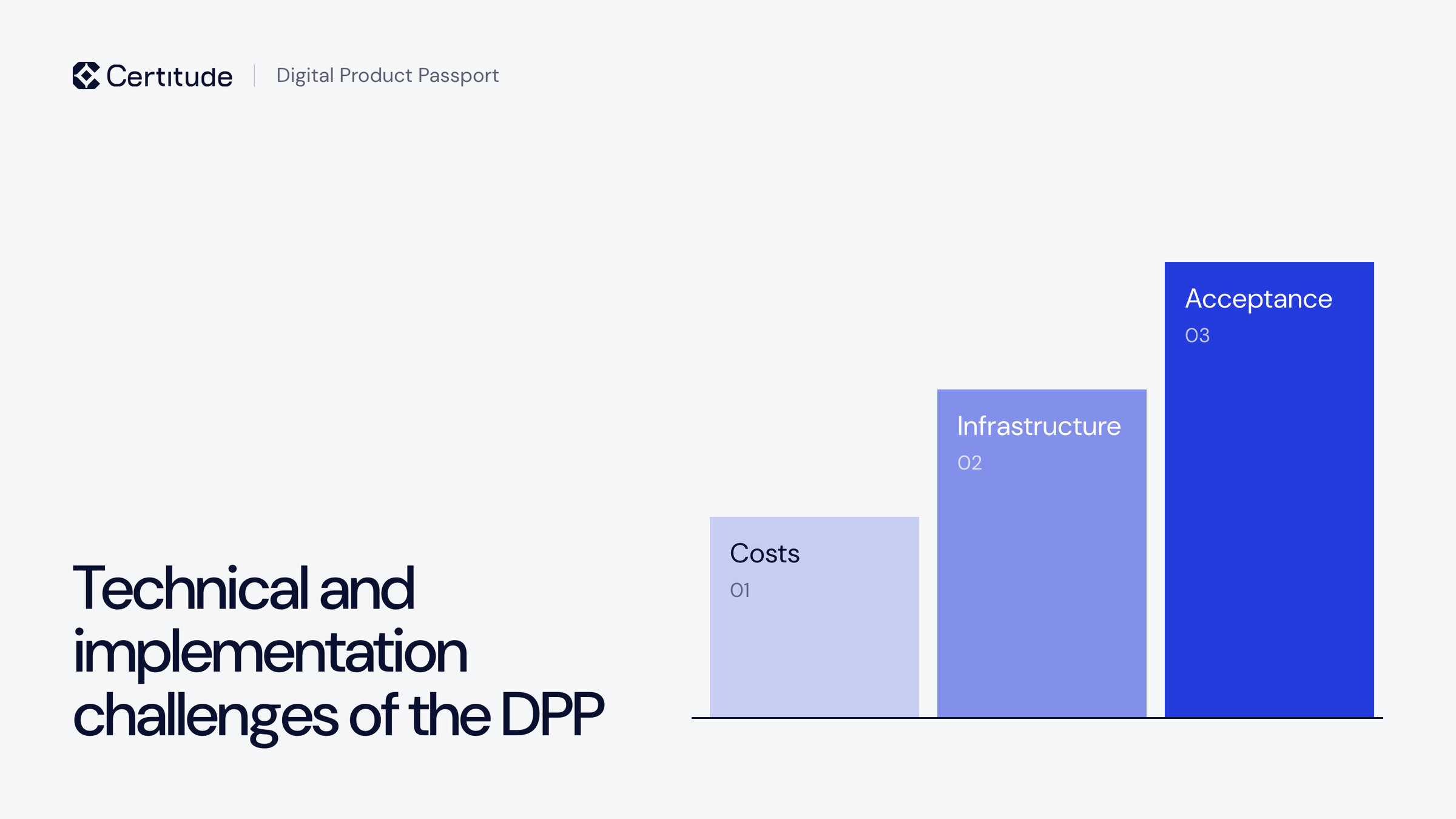
1. Implementation costs
One of the most sensitive aspects for companies, especially SMEs, is the initial costs associated with the adoption of the DPP.
Digitization of processes
Many companies still manage product information manually or in closed systems. The DPP requires digitizing data on raw materials, manufacturing processes, energy consumption, repairs, and recycling. This change implies investments in:
- Management software.
- Data capture systems in the plant.
- Employee training.
Certifications and audits
The DPP requires that the information be verifiable. This entails additional costs in external certifications, process audits, and data validation by third parties.
Scalability
Large companies can better absorb these costs, but for SMEs the challenge is greater. The lack of financial and technical resources can become a barrier to their adaptation, unless there are public incentives or affordable solutions.
2. Technological infrastructure
Beyond costs, the DPP requires a robust digital infrastructure that guarantees the collection, verification, storage, and consultation of data.
Interoperability
The system must be common to the entire EU. This implies that the data generated in Spain, Germany, or France must be compatible and verifiable in any country. Without clear standards, the DPP would run the risk of fragmenting into isolated solutions.
Security and immutability
The data in the DPP cannot be manipulated. This is where blockchain technology comes into play, which ensures the immutability of records and allows for public and reliable consultations. However, integrating blockchain into industrial processes poses challenges in scalability and energy efficiency.
Digital Identity of Products
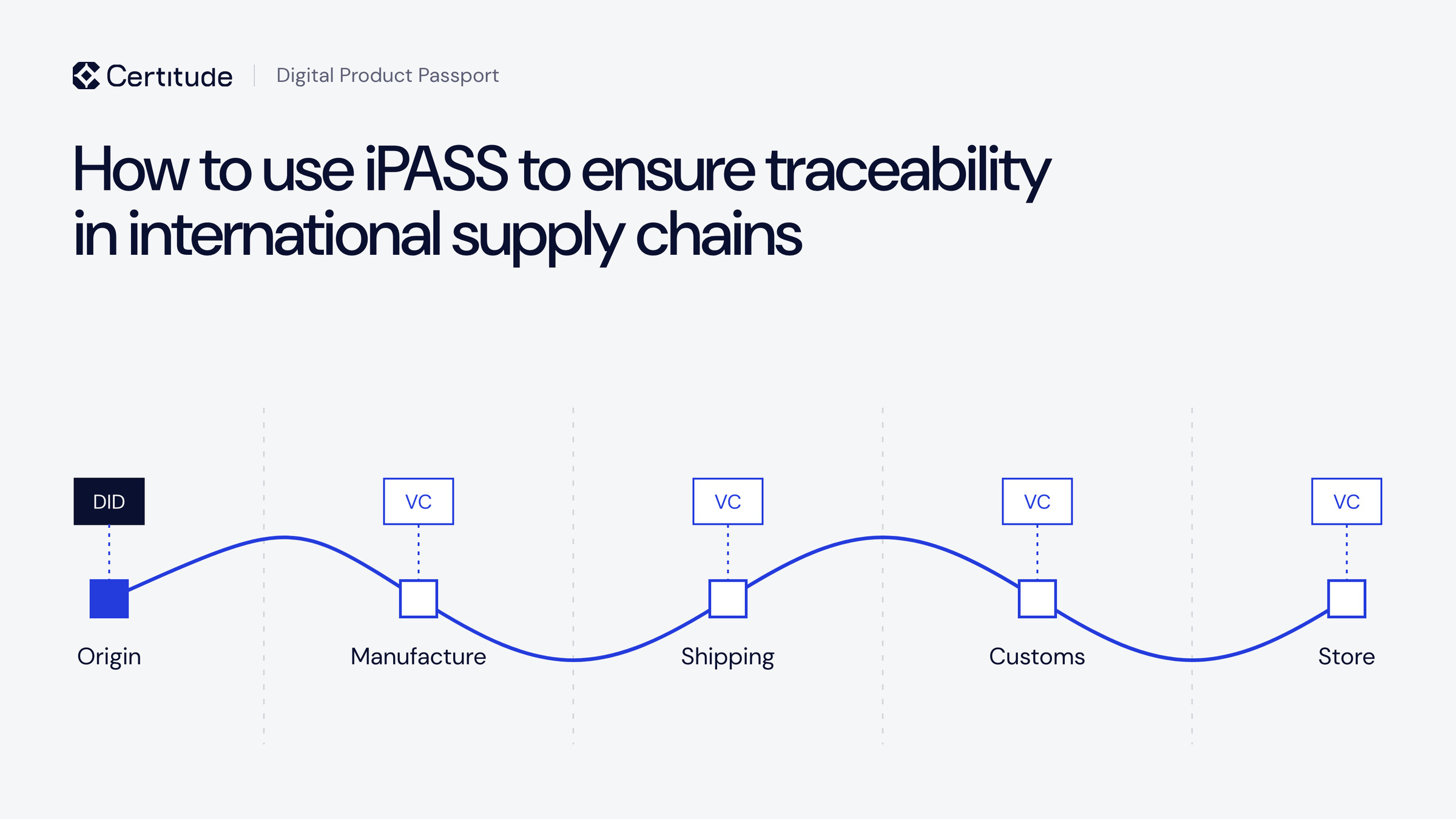
Each good will need a Decentralized Digital Identifier (DID) that accompanies it throughout its life. Managing millions of unique identifiers will be a technical challenge of great magnitude.
Consumer access
The consultation interface, usually through QR or URL, must be simple and accessible to any user, avoiding technological barriers.
3. Acceptance by companies
The success of the DPP depends not only on technology but also on business acceptance.
Initial reluctance
Some companies may see the DPP only as a regulatory obligation, without perceiving the benefits of transparency. This can generate resistance to investing in traceability systems.
Risk of greenwashing
If companies do not commit to real transparency and seek to manipulate the narrative, the DPP could become an exercise in “formal compliance” without real impact.
Hidden opportunities
Paradoxically, those who adopt the DPP proactively will discover competitive advantages:
- Brand differentiation.
- Access to new markets.
- Loyalty of conscious consumers.
- Possibility of accessing green financing.
The challenge is to communicate these benefits and accompany companies in the process.
4. Acceptance by consumers
The DPP must also earn the trust of end users.
Education and outreach
Many consumers are still unaware of what the DPP is. It will be necessary to explain how it works, what information it offers, and how it can help them make responsible decisions.
Usability
Access must be simple: scan a QR code on the label of a garment, an appliance, or a battery container and access clear, understandable, and verifiable information.
Perceived value
If consumers perceive that the information is useful—for example, to know if a product is recyclable, repairable, or more sustainable than another—they will adopt the DPP as a natural part of their shopping experience.
5. The role of iPASS in overcoming the challenges
At iCommunity, we have created iPASS precisely to facilitate the implementation of the DPP and reduce the technical complexity for companies.
How iPASS helps with costs
- It offers a scalable and affordable platform, adapted to both large companies and SMEs.
- It digitizes data in a standard environment, reducing integration costs.
- It allows automating verification processes, reducing the need for manual audits.
How iPASS provides infrastructure
- It integrates Verifiable Credentials (VC) to record each product milestone.
- It uses Digital Identifiers (DID) to provide authenticity to each good.
- It relies on the iBS blockchain platform to guarantee immutability and public consultation.
- It facilitates access via QR/URL, ensuring a simple experience for consumers.
How iPASS drives acceptance
- It converts the DPP into a brand value-add, not just a regulatory obligation.
- It facilitates the communication of the product’s history to consumers.
- It reinforces the reputation of sustainability and transparency of companies.
6. Global challenges and the need for collaboration
The DPP will not be an isolated effort. For it to work on a large scale, it will be necessary:
- Collaboration between governments and companies to define common standards.
- Financial and technical support to SMEs, which are the backbone of European industry.
- Continuous technological innovation, to ensure the scalability of solutions such as blockchain.
- Consumer education, so that society understands and values the importance of the DPP.
The DPP is, in essence, a collective project that requires coordination throughout the value chain.
The Digital Product Passport promises to revolutionize the way we produce, consume, and recycle, but its implementation is not without its challenges. The initial costs, the need for a robust technological infrastructure, and the acceptance by companies and consumers are the main challenges to overcome.
However, with tools like iPASS, the path towards compliance with the DPP becomes simpler, more scalable, and accessible. The challenge is not minor, but the opportunities for transparency, sustainability, and competitiveness far outweigh the difficulties.
The future of European industry will be digital, traceable, and circular, and success will depend on how we overcome these challenges to transform regulation into a real lever for positive change.